Solitaire Fish
- 4.8
- Rating
- 1.00M
- Installs
- Free
- Price

 Analysis by App-foxy
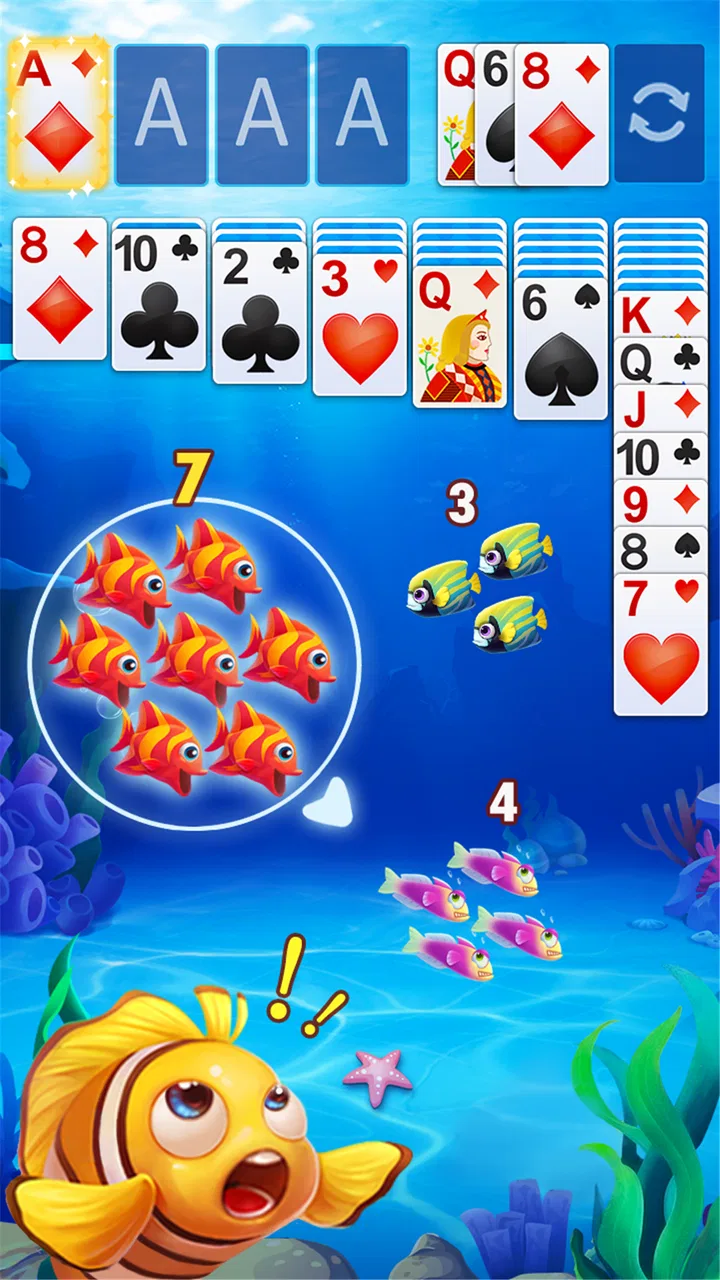
I spent time with Solitaire Fish as a light card game built around two familiar ideas: playing solitaire hands and gradually creating a more attractive aquarium. That combination gives each short session a little more purpose than a plain digital deck, while keeping the basic appeal of solitaire intact. I found it easy to pick up when I had only a few spare minutes, but it also offered enough progression to make me want to return later and improve the underwater setting.
This is a free game from Wood Puzzle Sudoku Games, available for Everyone and listed in the card category. It has built a sizeable audience, with over a million installs, a 4.8 average from around 26 thousand ratings, and about 1.8 thousand written reviews. Those figures suggest that the simple format works for many players, although popularity alone does not make it the right choice for every solitaire fan.
My overall impression is that the game succeeds best as a relaxing, visually themed alternative to standard solitaire. It is not the app I would choose for a serious card-game challenge, a completely distraction-free experience, or a game with deep strategic variety. However, if you like the idea of turning routine card rounds into progress toward a personal aquarium, it has a clear and pleasant identity.
You May Also Like

 Blood Strike: 2.5 Anniversary
Blood Strike’s Loadouts Turn Every Drop Into a Tactical Gamble
A close look at Blood Strike’s custom loadouts: how fast access to signature weapons reshapes its battle royale rhythm, rewards preparation, and narrows the gap between fights.

 Pandora - Music & Podcasts
Pandora’s Music Is Easy to Start, but Harder to Recover
Pandora’s strength is its low-effort path from a seed to a station. Its weak spot is how much confidence it asks you to place in connection, setup, and quiet recovery.

 8 Ball Pool
 Is Built on Rivalries, Rematches, and Routine
A close look at the rivalries, rematches, shared routines, and unanswered safety questions that turn a quick pool match into a persistent mobile community.

 Samsung Music
’s Quiet Strength Is Playing What You Already Own
Its reach comes less from spectacle than from dependable access to a personal library. That simplicity is both the app’s strongest retention engine and its ceiling.

 AccuWeather: Weather Radar
AccuWeather Review: A Quick, Clear Forecast for Everyday Decisions
For everyday plans, the best forecast is the one you can understand quickly. AccuWeather makes rain timing, radar, and local conditions easy to act on, with a few trade-offs.

 Hill Climb Racing
Why Hill Climb Racing Still Turns Crashes Into One More Run
A tiny car, a bumpy hill and one more upgrade: Hill Climb Racing keeps resurfacing because its simple chaos makes every near-miss feel personal.
More From Our News Desk



How the card play and aquarium progression fit together
I find the card-and-aquarium pairing easiest to judge by watching how each part changes the pace of a session: the cards provide a clear, repeatable task, while the aquarium gives completed play a longer-term context. That distinction matters if you enjoy a visible goal but do not want decoration to replace the game itself. It also helps explain why the latest build is best approached as a refinement of this casual format, not as a different kind of card game.
A familiar starting point for casual players
The central appeal is that you do not need to learn a complicated ruleset before playing. The solitaire format is recognizable, so the first few rounds feel approachable even if you normally play only occasionally. Cards remain the focus, but the aquarium theme gives the surrounding experience more personality than a bare table with a standard background.
I appreciated that the game can fit naturally into small gaps in the day. A short session works when I am waiting for an appointment, taking a break from work, or winding down before bed. Instead of committing to a long level or a multiplayer match, I can open it, play a hand, and stop when I feel finished. That makes it particularly suitable for people who want gentle entertainment rather than an intense gaming session.
The aquarium also changes the emotional rhythm. A difficult hand can be frustrating in ordinary solitaire because the only reward is finishing the layout. Here, the broader sense of building and beautifying an underwater space gives the round a softer context. I found that helpful when I wanted something calming, although players who care only about card efficiency may see the decorative layer as unnecessary.
Why the aquarium theme matters more than it first appears
The underwater setting is not just a visual replacement for a traditional green card table. It gives the game a reason to continue after a single successful hand. Progress feels more visible when it is connected to a place that gradually becomes more appealing, and that creates a simple personal goal: return, earn progress through play, and make the aquarium feel more complete.
That structure is useful for two different kinds of players. Someone who enjoys decorating virtual spaces can treat the card rounds as a way to reach the next satisfying improvement. Someone who mainly wants solitaire can ignore much of the theme and use the aquarium as a pleasant backdrop. In my experience, the game works because neither side completely depends on the other.
There is a trade-off, though. The more attention you give to presentation and collection-style progress, the less the game resembles a pure solitaire utility. If you want an app that opens directly into a clean, no-frills card layout, a conventional solitaire title may feel faster and less busy. Solitaire Fish is better for players who enjoy a little atmosphere around the cards.
Small-session use without treating it like a full strategy game
I would describe the game as casual rather than demanding. The satisfaction comes from making sensible moves, completing rounds, and seeing the aquarium develop, not from mastering a tournament-level system. That distinction matters when choosing it. The relaxed format is a strength for a commuter or a player who wants to switch off, but it may feel shallow to someone looking for unusual rules, competitive rankings, or a large strategic learning curve.
One practical way to use it is to set a personal stopping point before opening the game. For example, I might play during a short break and stop after completing a hand instead of continuing automatically. This keeps the experience relaxing and prevents the progression loop from turning a five-minute visit into a much longer distraction. The game is especially well suited to that kind of self-contained routine.
What the current version says about its direction
When I look at the current version, I focus less on its number and more on the design choices it preserves: approachable solitaire, short play sessions, and aquarium progress as a companion reward. That makes it a comfortable fit for players who value consistency, though anyone hoping for a major change in challenge should keep expectations measured. The same balance becomes clearer when comparing it with other familiar ways to play solitaire.
A mature release rather than a brand-new experiment
The current version is 2.0.3, while the game’s release date is December 30, 2020. That combination tells me I am looking at an established product rather than an early test of an idea. The concept has had time to settle into its card-and-aquarium identity, and the version number suggests a product that has moved beyond its initial launch stage.
I would not interpret the version number as proof of a particular feature or a promise of a major future overhaul. What it does provide is useful context: the current experience should be judged as a developed casual game, not as a rough first attempt. For a new player, that generally makes the decision easier because the basic concept is already clear and the app has an existing audience.
The developer, Wood Puzzle Sudoku Games, is also reflected in the game’s broader puzzle-oriented character. Even though the experience is specifically a card game, it is designed around accessible rules, repeated short challenges, and gradual progress rather than a story-heavy campaign. That helps explain why it feels approachable from the first session.
What has changed for players over time
The safest way to understand the product’s evolution is to focus on its present shape rather than imagine undocumented additions. Today, the important combination is stable: solitaire provides the repeatable activity, and the aquarium supplies the visual and progression motivation. The game’s identity is therefore more defined than a generic card app that offers only a deck and a score.
For existing users, a current version such as 2.0.3 is relevant because it represents the build they are likely to encounter now. A player returning after a long break should approach it as the same core idea in a maintained, developed form, rather than expecting an entirely different genre. That continuity is useful if the original appeal was the relaxing aquarium setting.
At the same time, I would keep expectations realistic. A version update does not automatically mean that the game has solved every issue associated with casual mobile design. The experience can still feel repetitive if you play for long stretches, and the decorative progression may not provide enough variety for someone who wants a constantly changing challenge. Its evolution appears to reinforce the original formula more than replace it.
How the current state affects someone installing today
A new player can start without needing to understand a large universe of characters, lore, or advanced systems. The learning curve is gentle, and the theme makes the app feel more welcoming than an austere card utility. That is one reason I would recommend it to a family member who likes simple games and enjoys visual customization.
The Everyone age rating also supports that broad accessibility. I would still describe the game as best for people who enjoy calm repetition, because the rating does not change the fundamental nature of the experience. It is suitable in presentation for a wide audience, but not every wide audience will enjoy the same pace or progression loop.
The game is free to download, which makes trying the core experience straightforward. There are in-app purchases ranging from $0.99 to $79.99 per item, so I would recommend checking the purchase flow carefully and deciding in advance whether you want to spend anything. My advice is to play naturally first. The aquarium theme is most enjoyable when it remains a pleasant extra rather than something that pressures you into buying progress.
Where it fits among familiar solitaire alternatives
My choice between this game and a plain solitaire app depends on what I want from a break: immediate, uncluttered card play or a more atmospheric routine with a reason to return. Solitaire Fish leans toward the second option, but that added context is not automatically a benefit for players who prefer strict focus on the cards. The practical question is how to enjoy its loop without letting repetition or optional spending take over.
Compared with plain solitaire applications
A traditional solitaire app usually wins on speed and clarity. It may open immediately to the cards, keep the interface minimal, and make the completion of each hand the entire objective. If that is what you want, Solitaire Fish adds a layer you may not need. The aquarium can make the experience warmer, but it can also make the route from opening the app to playing feel less purely functional.
In return, the underwater setting gives this game a stronger sense of place. I am more likely to remember why I returned because the aquarium creates a visible long-term context. A plain solitaire app can be ideal for a quick, focused round; this one is more appealing when I want the card activity paired with a gentle collection or beautification goal.
Compared with competitive and rule-heavy card games
Players who prefer online competition, deep deck construction, or complex tactical decisions should look elsewhere. Solitaire Fish is not compelling because it creates a high-pressure contest. Its strength is the opposite: it lowers the barrier to entry and keeps the mood comfortable. That makes it a poor substitute for a strategic card battler, but a good companion for someone who finds those games exhausting.
I also would not choose it as a replacement for a physical solitaire deck when the goal is to practice a specific variation with strict control over every rule. The digital presentation and aquarium progression are central to the appeal, so the game is designed more for entertainment than for recreating a tabletop exercise with no extra framing.
Compared with aquarium and decoration games
Against a dedicated aquarium game, the card play is the decisive difference. A player who wants to spend most of the time arranging an underwater habitat may find the solitaire rounds too prominent. Here, the aquarium is connected to the card activity, so it works best for people who want both elements in one loop rather than a full simulation of fish care.
This also creates a useful compromise for households with different tastes. One person can enjoy the calming visual setting, while another can focus on completing cards. It is not a substitute for a detailed management game, but it offers more personality than a standard solitaire screen.
Practical strengths, friction points, and useful habits
I get the most from this game when I treat a hand as a self-contained break and the aquarium as a bonus, rather than a task that must be advanced every time I open it. That habit keeps the relaxing theme from turning into pressure to continue, and it makes the game’s limits easier to recognize: familiar card play can still feel repetitive over longer sessions. With that in mind, the final recommendation depends on whether this gentle rhythm matches your own habits.
A good routine for short breaks
My preferred use case is a short, deliberate session. I open the game when I want a quiet mental reset, play a few rounds, and treat aquarium improvement as a background reward rather than a demand. This works better than leaving it open during every spare moment, because the same basic card rhythm can become predictable when played continuously.
Another useful habit is to pause after a frustrating hand instead of immediately chasing a better result. The aquarium theme makes it tempting to keep going, but the game is more relaxing when I accept that not every round needs to be completed perfectly. A short break preserves the casual quality that makes the title appealing in the first place.
Managing the progression without overspending
Because the game is free but includes optional purchases, I would approach the decorative progression with a clear boundary. Decide whether you are comfortable playing at the natural pace before considering any item. The stated purchase range is wide enough that impulse spending deserves attention, especially for younger players or anyone who tends to spend in small increments without tracking the total.
The aquarium can still provide motivation without becoming the only reason to play. I found the best balance came from treating each improvement as a bonus attached to a solitaire session I already wanted. If the only enjoyable part becomes unlocking the next visual change, the card rounds may start to feel like a chore.
Where repetition becomes noticeable
The main limitation is the possibility of sameness. Solitaire is inherently repeatable, and the aquarium theme changes the mood more than it transforms the underlying card activity. Players who need frequent new mechanics may run out of interest sooner than players who enjoy familiar routines.
That does not make the game poorly designed; it simply defines its audience. I would recommend alternating it with another type of game if you notice that every session feels identical. It is strongest as a calm option in a broader mobile library, not necessarily as the only game you play.
Device and installation considerations
The minimum operating-system requirement is Android 6.0, so the listed compatibility is relatively accommodating for older Android devices that still meet that requirement. I would still keep the phone’s available storage and general performance in mind, as with any game that uses visual presentation, but the operating-system requirement itself does not force users onto a recent Android release.
The current version gives returning users a clear reference point when checking whether their installation is up to date. For someone deciding whether to try it, the more important question is not technical novelty but whether the combination of solitaire and aquarium decoration matches their preferred pace.
Who should choose it and who should skip it
I think Solitaire Fish is a strong fit for casual solitaire players who want more atmosphere than a standard card table provides. It is also a sensible choice for people who enjoy light progression, virtual beautification, and short sessions that can be stopped without losing the point of the game. The Everyone rating and free entry make it approachable for a broad audience, while the established audience gives it some reassurance as a mainstream casual option.
I would be more cautious recommending it to players who dislike in-app purchases, even if they intend never to buy anything. The purchase range means it is worth staying alert around optional spending. I would also steer competitive card players, fans of complex strategy, and people seeking a highly varied campaign toward a different category of game.
For existing users, the current 2.0.3 release is best viewed as a continuation of the game’s established formula. I would watch future updates for meaningful improvements to variety, progression balance, and the relationship between card play and aquarium customization, but I would not buy or install it based on expectations of features that are not part of the present experience.
After using it, my recommendation is straightforward: try it if the thought of completing solitaire rounds while building a more attractive underwater space sounds relaxing. Keep your sessions purposeful, treat purchases cautiously, and do not expect a deep strategy game. Its real strength is the comfortable blend of familiar cards and visible aquarium progress, and that focused idea is exactly why it works for the right player.
FAQs for Solitaire Fish
01What is Solitaire Fish and how does it differ from traditional Solitaire?
Solitaire Fish is a unique twist on the classic Solitaire card game, incorporating vibrant underwater themes and interactive fish characters. Unlike traditional Solitaire, this version includes engaging animations and rewards for completing levels, making it not only a mentally stimulating game but also a visually immersive experience.
02Is Solitaire Fish free to play, and are there any in-app purchases?
Solitaire Fish is free to download and play, offering a wide range of levels and features without any initial cost. However, it does include optional in-app purchases for players who wish to enhance their gameplay experience with additional themes, power-ups, or to remove ads.
03Can I play Solitaire Fish offline, or do I need an internet connection?
Solitaire Fish can be played offline, allowing you to enjoy the game without an internet connection. However, certain features like daily challenges, updates, and syncing your progress across devices require an internet connection to function properly.
04What are the system requirements for installing Solitaire Fish on Android and iOS devices?
For Android devices, Solitaire Fish requires Android 5.0 or higher, while iOS devices need iOS 10.0 or later. Make sure your device has sufficient storage space and is updated to the latest operating system version to ensure smooth gameplay.
05How does Solitaire Fish ensure a user-friendly experience for beginners?
Solitaire Fish is designed with beginners in mind, featuring a comprehensive tutorial that guides new players through the basics. The intuitive interface, coupled with simple controls and helpful tips, ensures that even those new to Solitaire can quickly grasp the gameplay mechanics and enjoy the experience.
Pros
- Engaging aquatic-themed graphics.
- Easy-to-understand gameplay.
- Daily challenges for rewards.
- Offline play available.
- Regular updates with new features.
Cons
- Contains in-app advertisements.
- Limited deck customization options.
- May drain battery quickly.
- Occasional app crashes reported.
- Some features require in-app purchases.

Solitaire Fish
Gallery